Summary
This was the Group’s first visit to Woolston Eyes Nature Reserve, which is designated as an SSSI because it is a nationally important site for breeding and wintering wildfowl and other wetland birds. It is situated just to the East of Warrington between the Manchester Ship Canal to the South and meanders of the River Mersey to the North. It comprises four large lagoons which are used in rotation for depositing canal dredgings. Recently used lagoons contain large expanses of open water and mud, whilst others are dry and at various stages of colonisation by vegetation. Overall they offer a wide variety of wildlife habitats which was reflected in the large number of species we spotted during our visit.
Entry is free but access is via high-security gates requiring a key to be borrowed from the Woolston Eyes Conservation Group which runs the site, so this imposed some unusual logistics which nevertheless worked very smoothly.
It proved to be a great day out for all concerned. The weather was almost ideal for birdwatching and photography, being dry and relatively warm, but mostly overcast so no harsh shadows to contend with. After a smooth journey in Stewart’s minibus we arrived in good time to pick up the key and were escorted to the car park at the end of the lane adjacent to No 3 Bed, where we began our visit, later moving to No 4 bed.
Highlights of the trip were great views of 10 to 12 Black-necked Grebes, mostly seen at No 4 bed, a marsh harrier and two pairs of Mediterranean Gulls. There were also lots of swifts swooping over the lagoons at No 4 Bed. The total species count was 47 seen and a further 3 only heard, including a cuckoo, making this a location that we should definitely visit again.
Members participating: 6
Bird list (47 species seen and 3 heard only)
| Blackbird | Gull-Black-headed | Robin |
| Blackcap | Gull-Lesser black-backed | Shelduck |
| Buzzard | Gull-Mediterranean | Shoveler |
| Canada goose | Heron | Song thrush (heard only) |
| Carrion crow | House Martin | Swallow |
| Chiffchaff | Jackdaw | Swift |
| Coot | Linnet | Teal |
| Cormorant | Magpie | Tit-Great (heard only) |
| Cuckoo (heard only) | Mallard | Tit-Long-tailed |
| Duck-Tufted | Marsh harrier | Wagtail-Pied |
| Gadwall | Moorhen | Warbler- Cetti’s |
| Goose-Barnacle (feral) | Mute Swan | Warbler-Reed |
| Goose-Greylag | Oystercatcher | Warbler-Sedge |
| Grebe-Black-necked | Plover-Lapwing | Whitethroat |
| Grebe-Great crested | Plover-Little ringed | Wood pigeon |
| Grebe-Little | Pochard | Wren |
| Greenfinch | Reed Bunting |
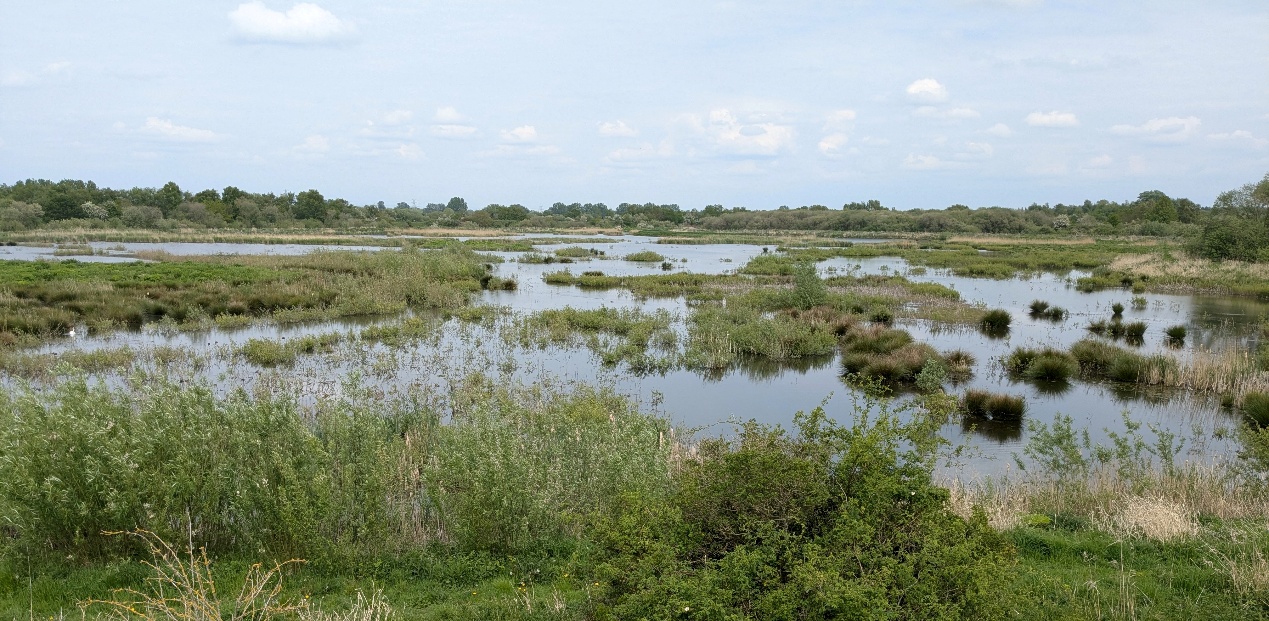
Lagoon at No 4 Bed – Martyn Grandy – if you zoom in you may be able to make out at least 7 Black-crested Grebes in the centre-left, below and to the right of the Mute Swan.
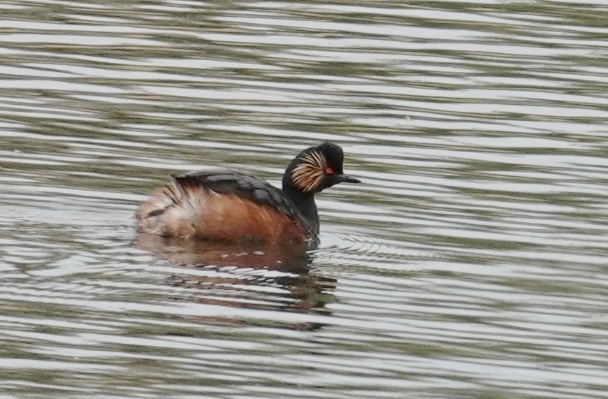
Male Black-necked Grebe – Martyn Grandy
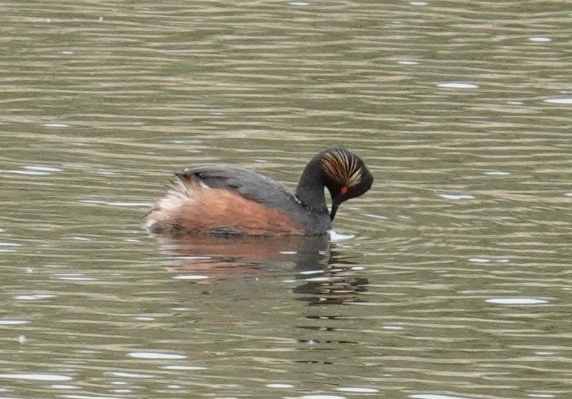
Male Black-necked Grebe – Martyn Grandy
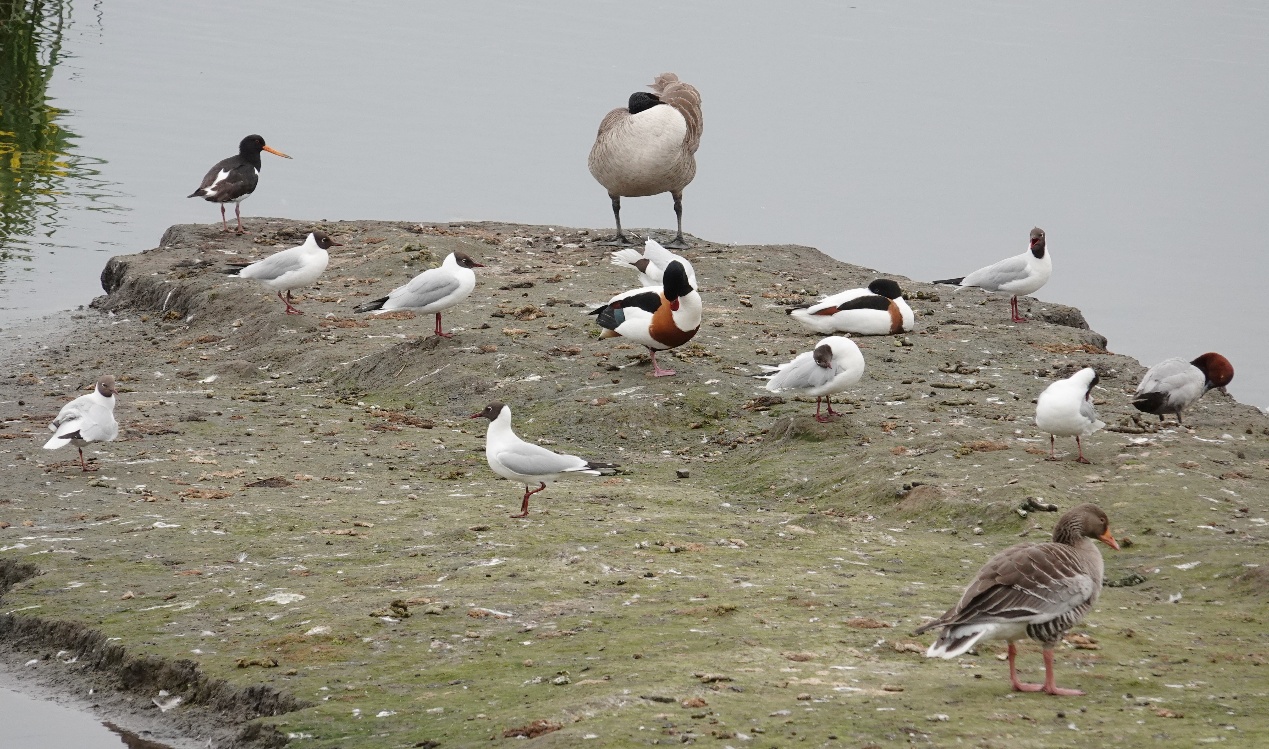
Oystercatcher, Canada Goose, Shelduck, Black-headed Gulls, Pochard, Greylag Goose – Martyn Grandy
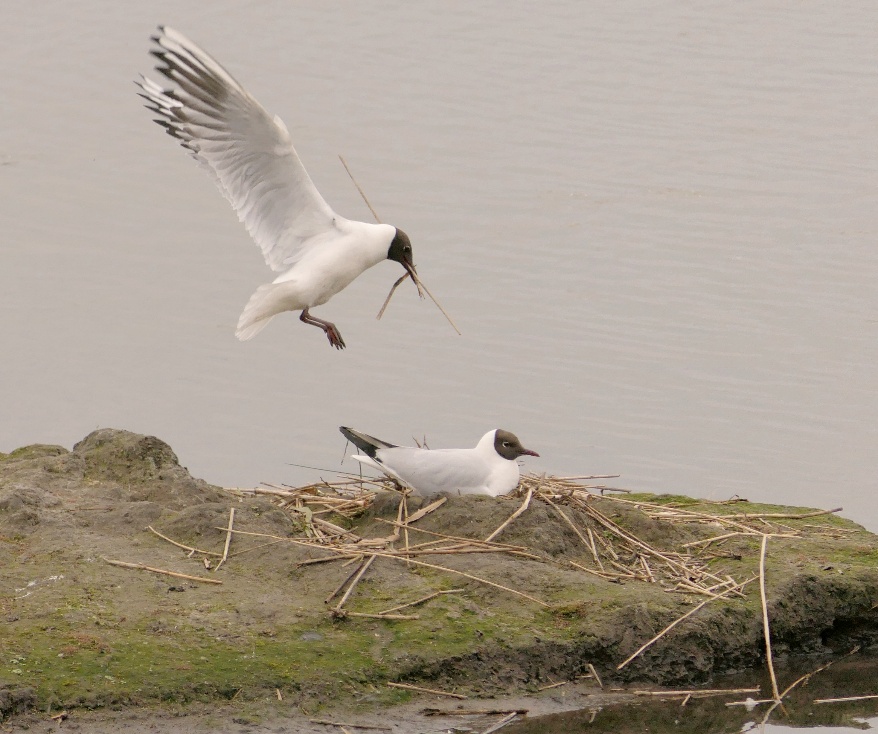
Nesting Black-headed Gulls – Chris Byrne
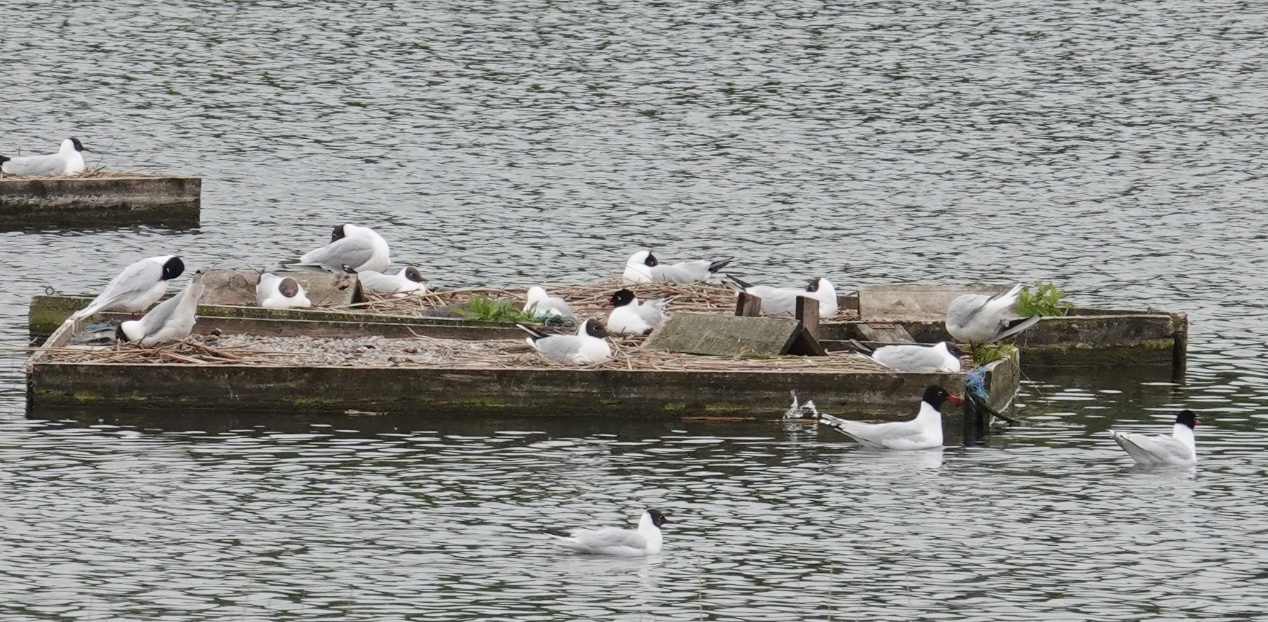
Two Mediterranean Gulls on the island and two in the water to the right, distinguishable by their very black heads and red bills – Martyn Grandy
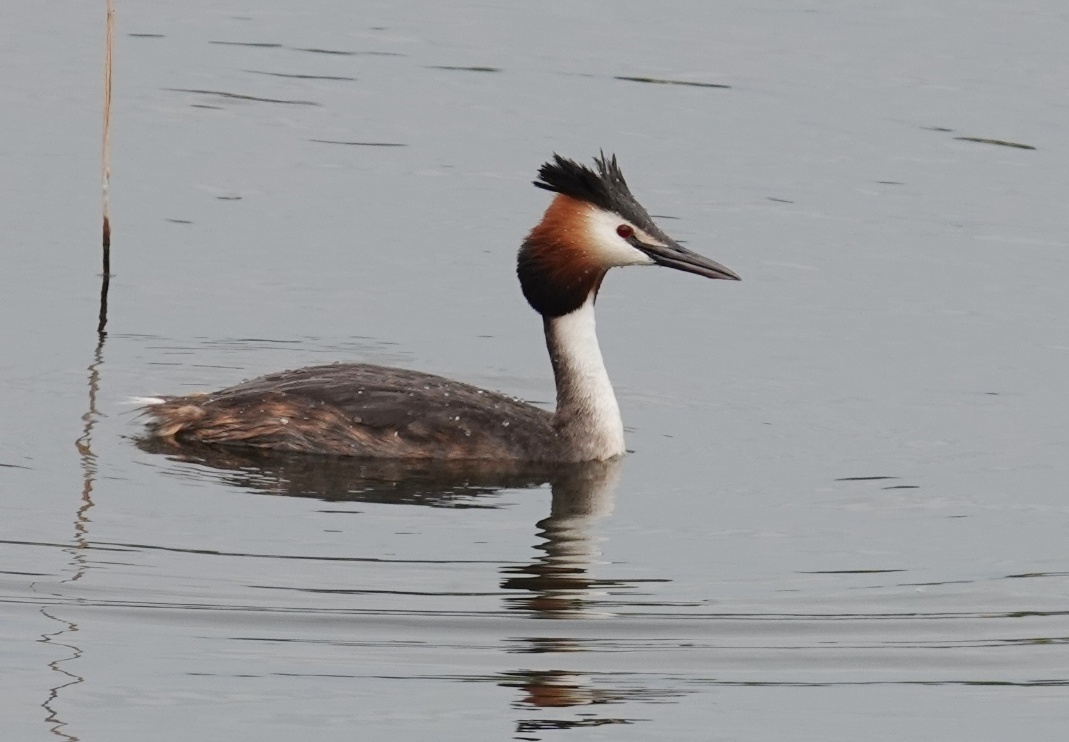
Great Crested Grebe – Martyn Grandy
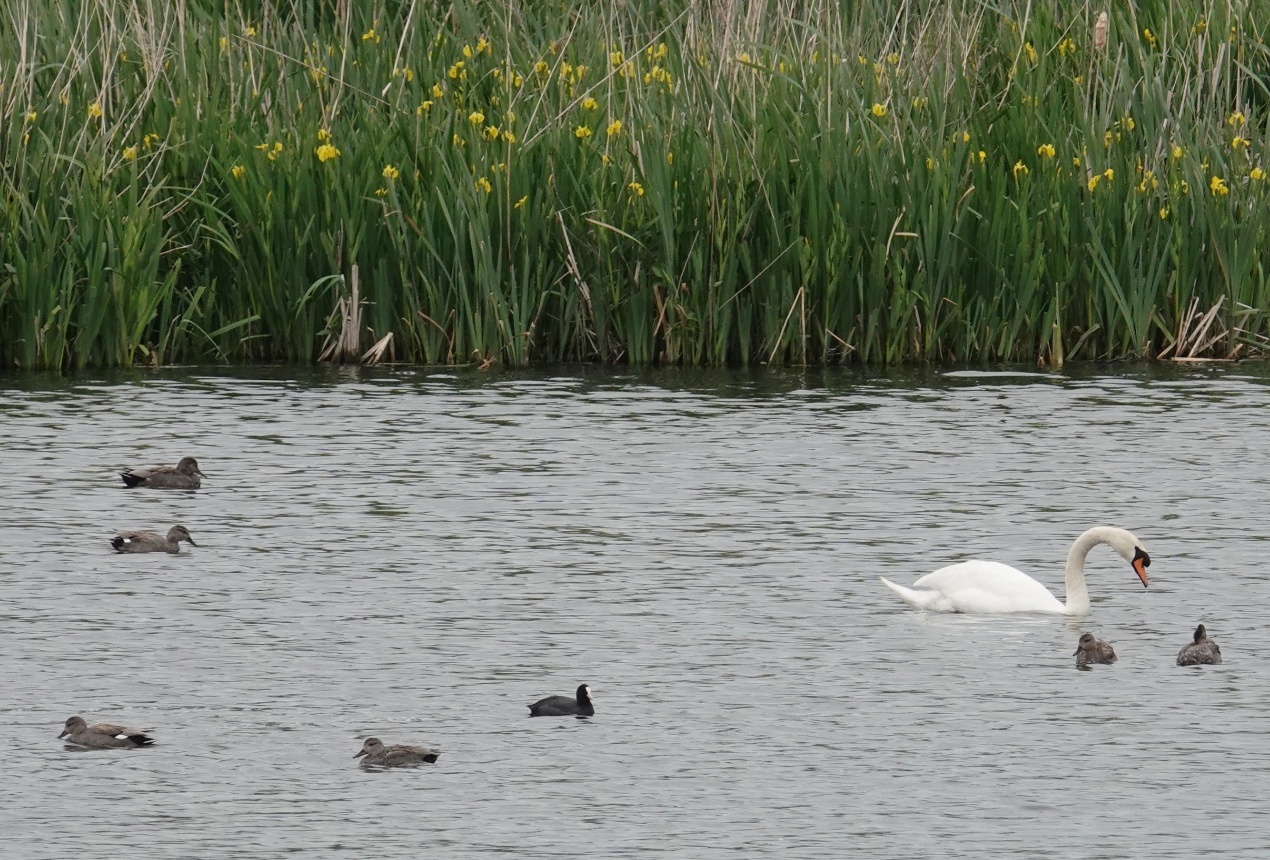
Gadwall, Coot, Mute Swan – Martyn Grandy
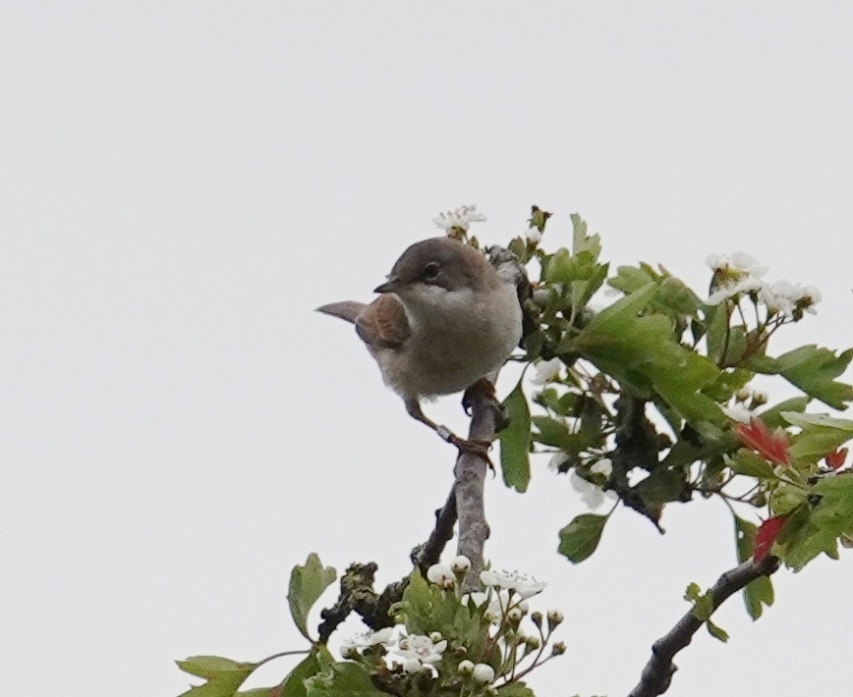
Whitethroat – Martyn Grandy
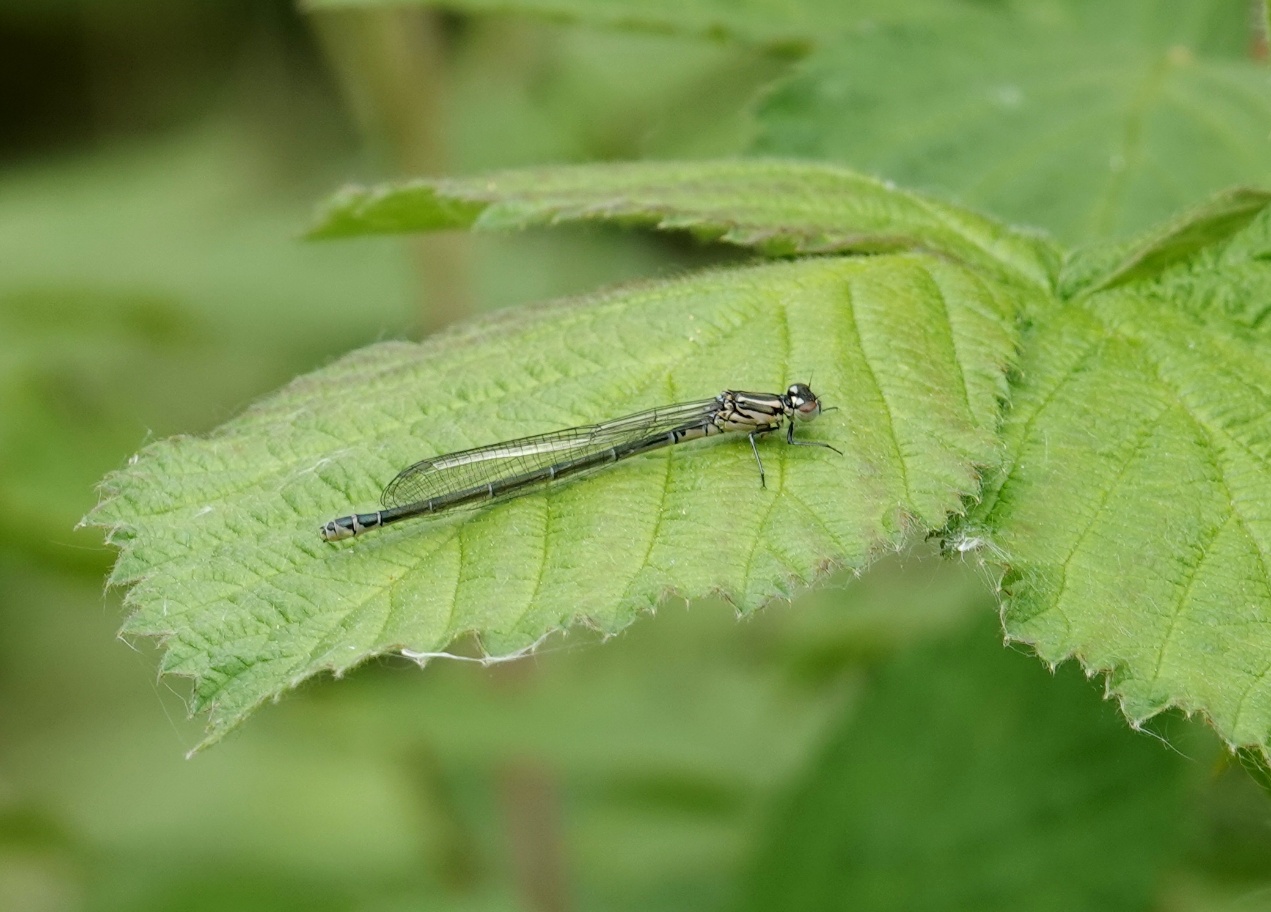
Azure Damselfly – Martyn Grandy